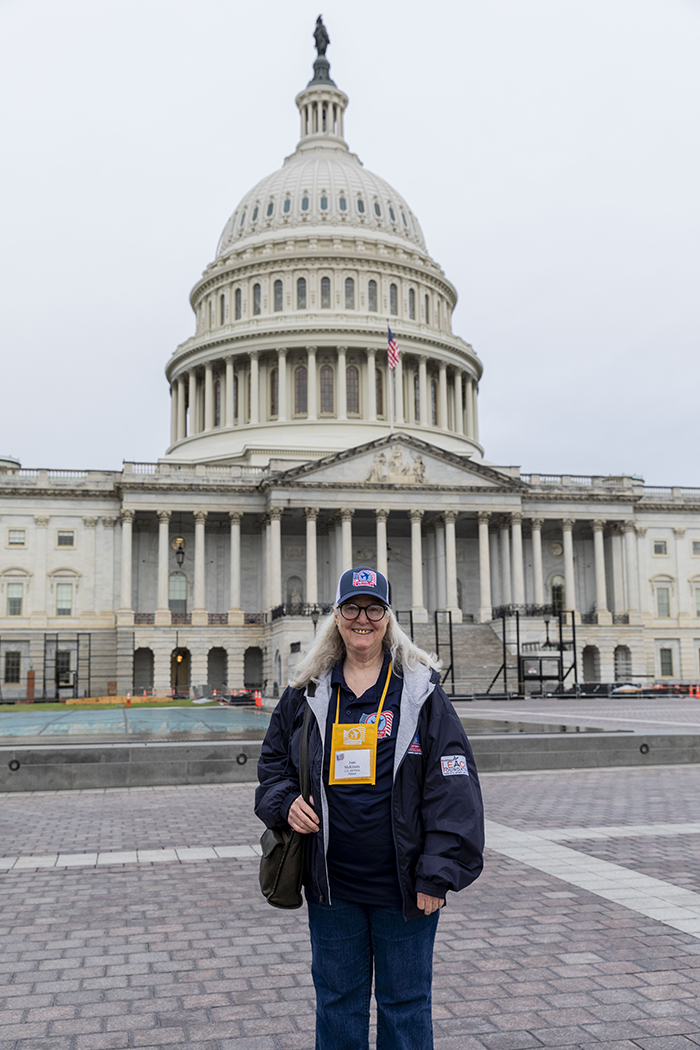

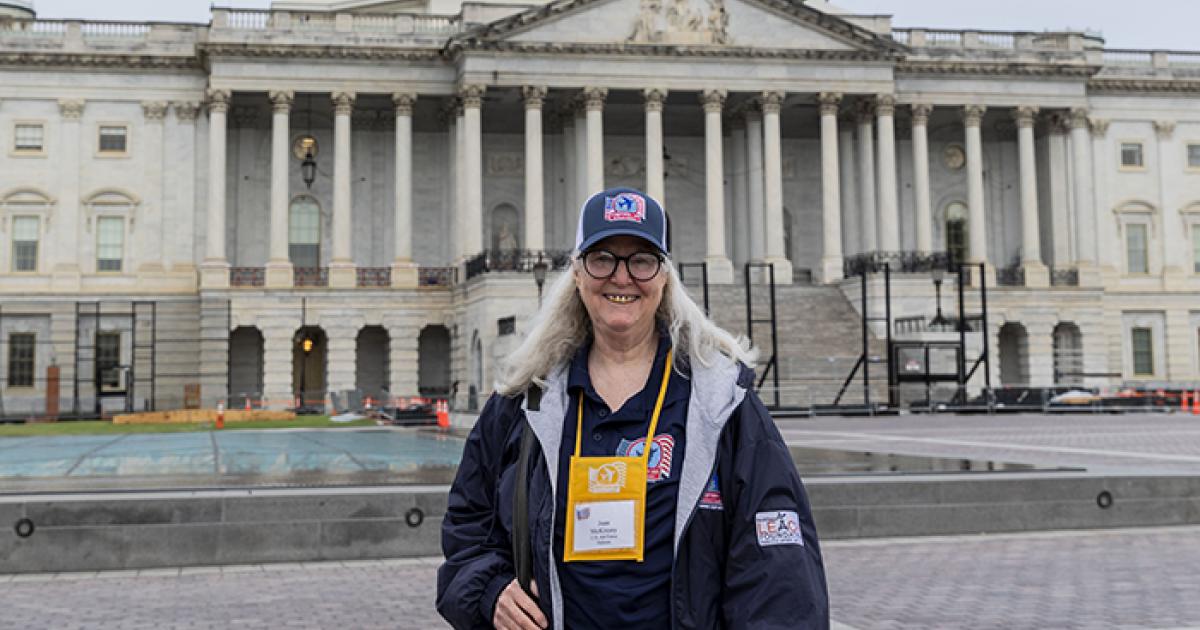
Joan McKinzey, Hebron, made her first trip to Washington, D.C., on the Western ND Honor Flight as a veteran of the U.S. Air Force. Photo by NDAREC/Liza Kessel
Fear.
Joan McKinzey knows it well. She knows it can stop time. She knows it can take root in your memory, keeping you from ever moving forward. She knows because a violent attack while walking home from a party in the 1970s nearly killed her. But the fear from that attack might have done worse.
“I’m sure he thought I was already dead,” McKinzey remembers.
Although she was stabbed multiple times and suffered a collapsed lung, she managed to escape her attacker and run to a neighbor’s house. The neighbor called an ambulance.
McKinzey shared her story with law enforcement, but says she was met with judgment and accusations she was somehow responsible for being attacked.
“That was probably worse than the actual experience, was just the absolute disdain that came with that,” she remembers.
Yet, she persevered.
Stepping forward
With a family military history extending to the Revolutionary War, McKinzey saw the military as the best example of strength and security. Her grandfather served in World War I, her father in World War II and her brothers in the Vietnam War era. They were protectors. Through their experience, she would build an emotional suit of armor.
“I was absolutely terrified of being out in the real world. And for some strange reason, I thought that joining up, serving alongside thousands of people I’d never met before was a safe place,” she says, careful not to claim her intentions to serve her country were selfless.
When McKinzey enlisted in the U.S. Air Force in 1974, integration of women in the military was gaining steam. The draft had just ended and the military was transitioning to an all-volunteer armed forces. Separate women-only branches were being phased out as anti-discrimination laws emerged and workplace standards evolved across the nation. Women in uniform could now enter a wider variety of job roles, no longer confined to medical, administrative or communications positions.
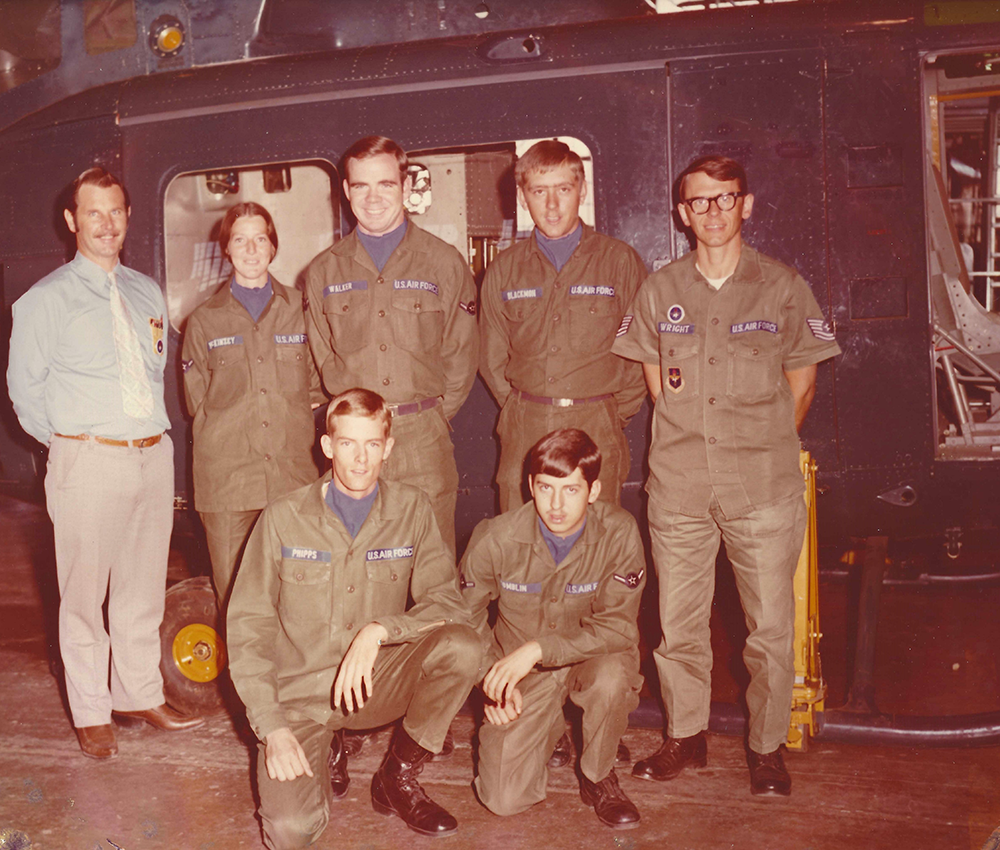
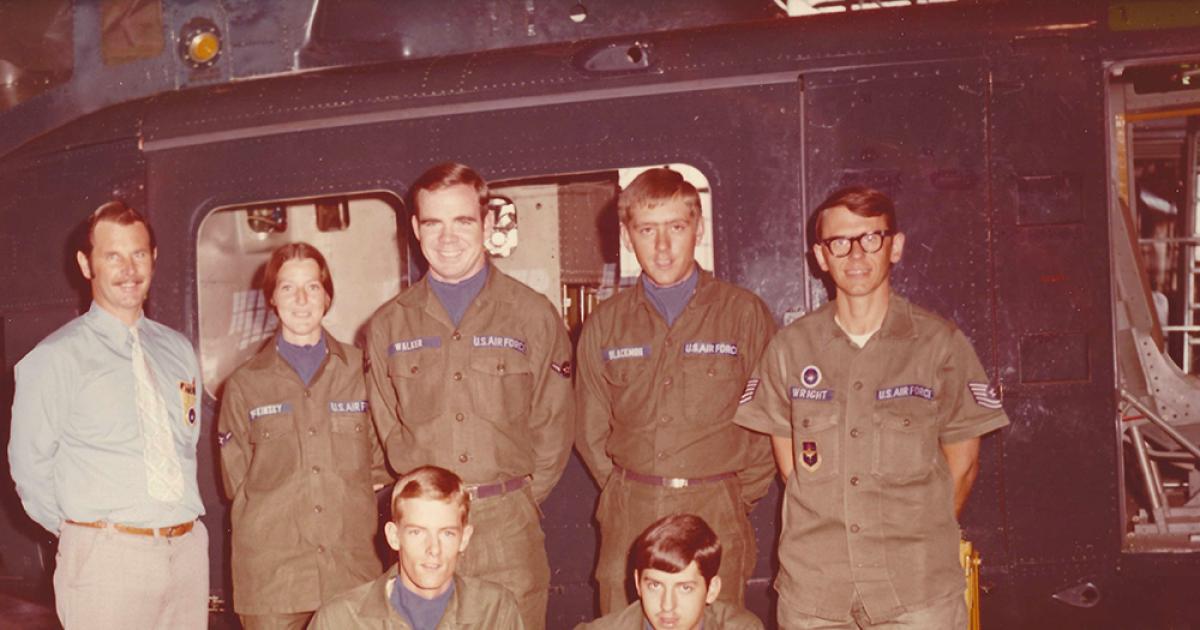
For McKinzey, those structural and cultural changes meant opportunity. She became a helicopter mechanic at Luke Air Force Base in Arizona, servicing and repairing retired UH-1P helicopters from the Vietnam War to support the Gila Bend Gunnery Range and to use in crash recovery efforts.
“I was the first woman on my end of the flight line,” she explains. “I liked the sense of camaraderie I had with most of the guys I was working with.”
McKinzey admits they were a little skeptical at first, but ultimately accepted her. She knew it when they gave her the nickname “Mack.” She wasn’t entirely free from discrimination or inappropriate attention, but she says she found the confidence to protect herself. At first, she came to the military looking for safety, but soon she found empowerment.
The freedom she discovered
Her military service and GI Bill paved the way for McKinzey to get her education. Learning became her passion and McKinzey eventually became an educator and earned several master’s degrees.
“Now, I think enlisting was one of the smartest things I ever accidentally did,” she says.
That decision empowered her and changed the trajectory of her life. Through her service, she developed courage, confidence and a special camaraderie with a community of veterans. When she boarded the Western ND Honor Flight in September, along with four other women and dozens of men, the journey brought her to the nation’s capital for the first time. And as McKinzey stood at the foot of monuments and memorials paying tribute to the most courageous among us, her favorite Georgia O’Keeffe quote echoed in her mind. Perhaps they, too, were afraid. Perhaps the measure of courage is not the absence of fear, but rather the determination to move forward in spite of it.
___
Hope Sisk is managing editor of North Dakota Living. She can be reached at hsisk@ndarec.com.