MHA Nation establishes Tribal national park
Photos by NDAREC/Kennedy Delap
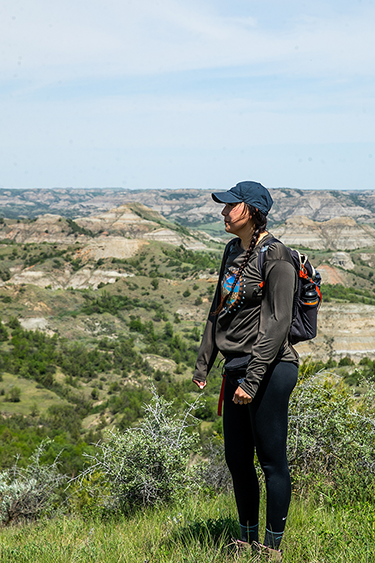
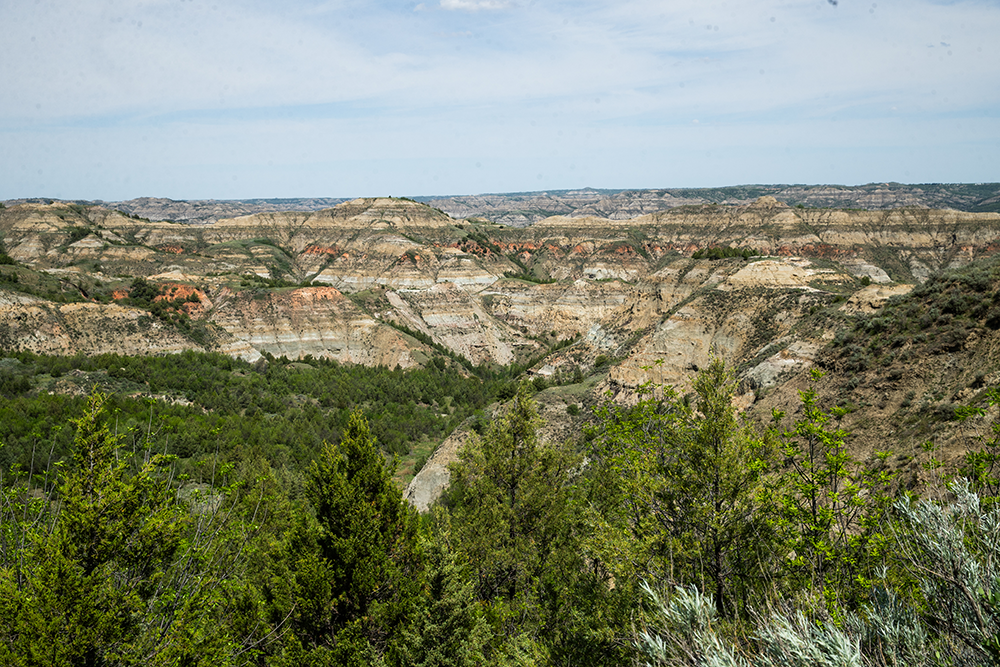
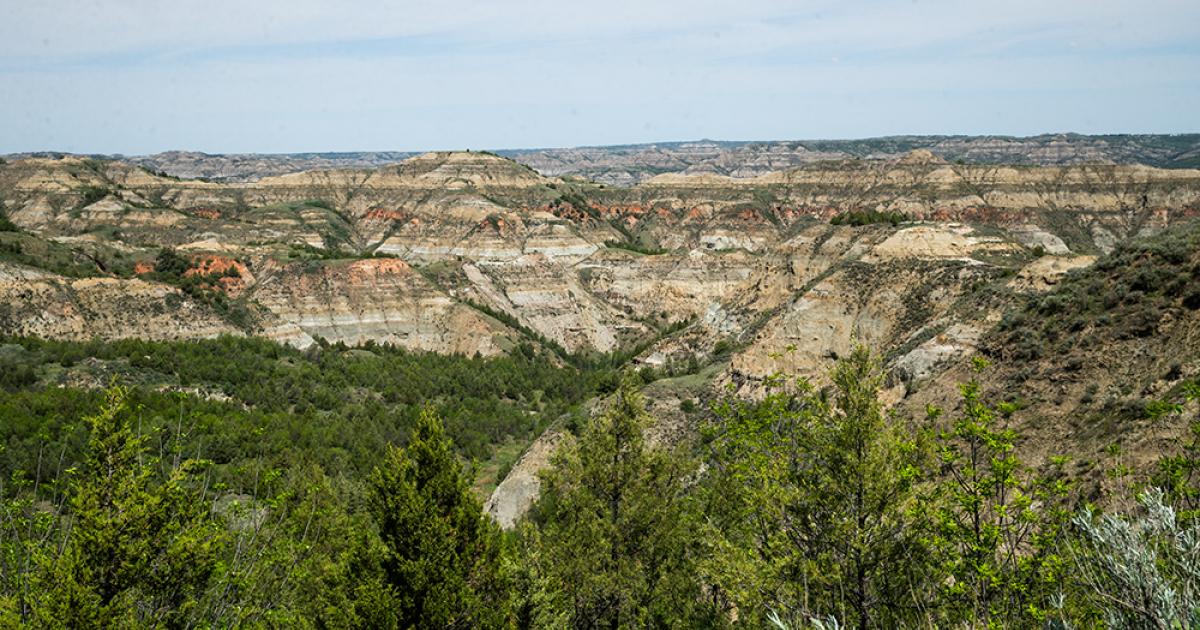
Amid the winding river, rugged Badlands and crested clay buttes, the landscape whispers the stories and culture of its first people. For Mary Fredericks, administrator of the Parks and Reserve Program for the Three Affiliated Tribes, the view brings a familiar feeling.
“It’s a special area when you’re coming across the hills, and you drop down and see those Missouri breaks. It just feels like you’re coming home,” Fredericks says.
Here, the Mandan, Hidatsa and Arikara (MHA) Nation has acquired 2,106 acres of its original lands to establish the Three Affiliated Tribes National Park on the Fort Berthold Indian Reservation.
The land was once part of the MHA Nation’s treaty territory before assorted allotment acts turned it into ranching land. When the land went on sale, tribal leadership saw the opportunity, bought back the land and turned it into a tribal national park.
Visitors will now be able to see parts of the western North Dakota Badlands they have never seen before. Its significance, however, runs deeper than recreation. Traditionally, this land was used for gathering and was home to medicinal plants used by Indigenous communities. The landscape itself is tied to them.
“This stuff around us is our home, and it’s attached to us through our sacred stories, our creation stories, our maashii (sacred story) and those maadadagua (long time ago),” says Zane Baker, collections manager at the MHA Nation Interpretive Center.
“Within these stories, it talks about the stars, it talks about the animals, talks about the landscapes around us. That kind of gives us the pedestal to be who we are, so without that foundation of the land around us, we are nothing,” he says.
The MHA Nation has called the Knife River and Missouri River systems home since time immemorial. Over the years, much has changed. But the stories and the history remain the same. Baker hopes reclaiming this land can help spark conversations and remind visitors of these stories.
For visitors entering the Fort Berthold Reservation from the south on Highway 22 or from Theodore Roosevelt National Park, the tribal national park welcomes them to the MHA Nation. The park also adds a new tourism destination to the Fort Berthold Indian Reservation map, alongside the attractions of Four Bears Casino, Lake Sakakawea and the MHA Interpretive Center.
“You would come in, and this would be your first look at Fort Berthold,” Fredericks says. “You’d be looking at the land and our relationship to the land, and the land itself, because it is really spectacular.”
The future of the park is taking shape. Hiking trails are being mapped, the visitor center is in the design process and a campsite is in the works. The park is currently open to foot traffic through a free permit system and future recreation may include canoeing, kayaking and snowshoeing.
With the establishment of Three Affiliated Tribes National Park, the MHA Nation is ensuring its land, its stories and its culture will be preserved for the future.
That’s what drives Fawn Fettig, administrative officer for the park. As a mother of three, she is helping create something lasting for her sons and future generations.
“This land will be here for years beyond you and I,” Fettig says.
For more information, visit tatnationalpark.com.
___
Kennedy DeLap writes and photographs for North Dakota Living. She can be reached at kdelap@ndarec.com.
The Three Affiliated Tribes National Park visitor center is located approximately 42 miles southwest of New Town and 17 miles north of Killdeer on Highway 22.