
In the 1950 Broadway musical, “Guys and Dolls,” Vivian Blaine sang, “I love you a bushel and a peck! A bushel and a peck and a hug around the neck!” I read the phrase was used to indicate an extraordinary amount. But to me, a bushel and a peck was my father’s seeding rate for wheat – 1¼ bushes of seed per acre. That would equate to a plant population of roughly 1.25 million seeds per acre.
In May 2010, Certified Crop Advisor Max Dietrich showed me what he called a “stress wheel.” It was a corn test plot, but instead of the corn being planted in long, parallel rows, Max’s rows were like the spokes of a large wheel. The closer you got to the hub, the greater the density of plants, and the more each plant had to compete with neighbors for the available sunlight, water and nutrients. Max was trying to find which corn varieties were best at handling the stress that resulted from increased population density.
Farmers today are doing what they can to reduce high input costs. One of those inputs is seed. A bag of hybrid corn seed can cost over $300. If seeded at a rate of 20,000 seeds per acre, the seed cost alone is $75 an acre.
Researchers are trying to find answers to farmers’ questions. If I reduce plant populations, will the reduced stress on each plant cause it to yield more or enough to offset fewer plants? Conversely, if I increase populations, at what point does the increased stress on each plant reduce yields more than the cost of the additional seed? Where is the plant population sweet spot?
That sweet spot is different between farms, between fields and even within each field. The optimum plant population depends on the productive capacity of the soil. Modern, variable rate technology is providing the solution. Today’s planters with variable rate technology can automatically vary how many seeds are planted as you drive across a field, depending on soil conditions.
Innovative wheat farmers today might still be seeding at a rate of a bushel and a peck, but not the whole field, and certainly not the entire farm. Research and technology have taken us a long way.
___
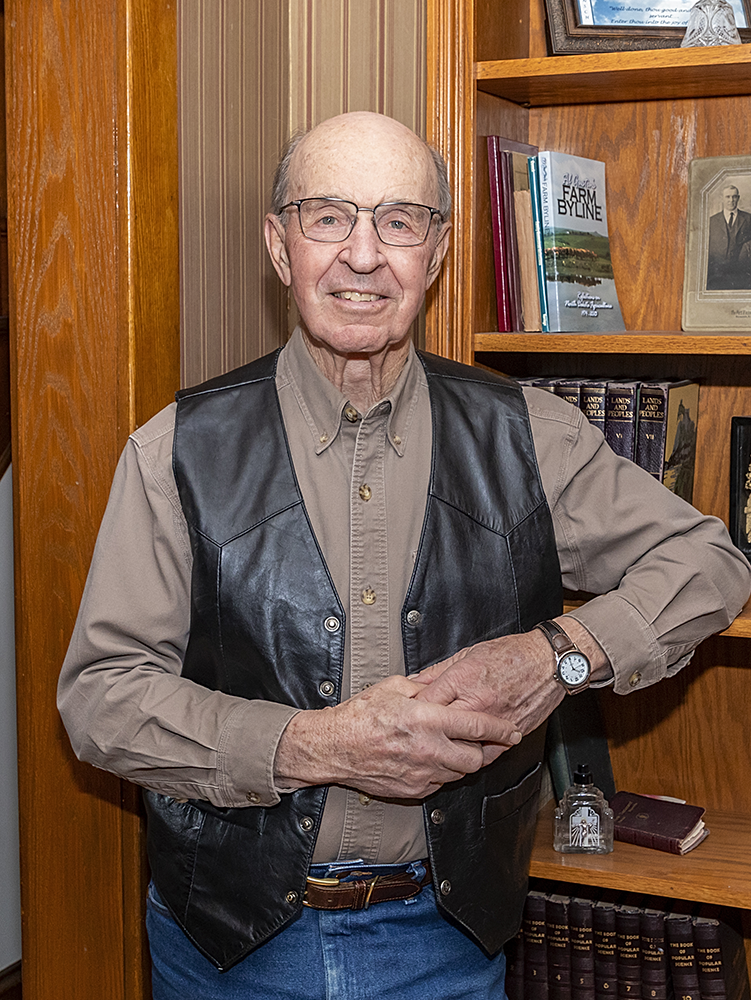
Al Gustin is a retired farm broadcaster, active rancher and a member of Mor-Gran-Sou Electric Cooperative.