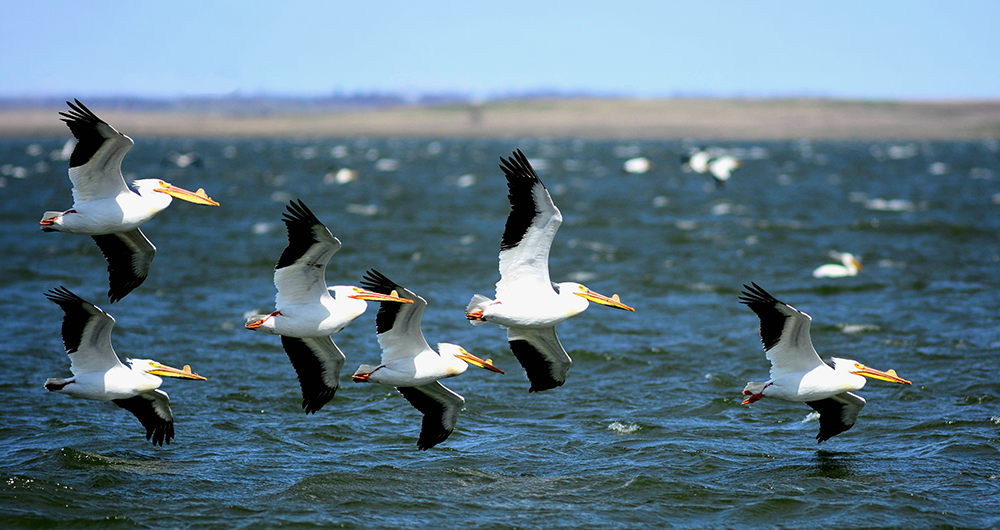

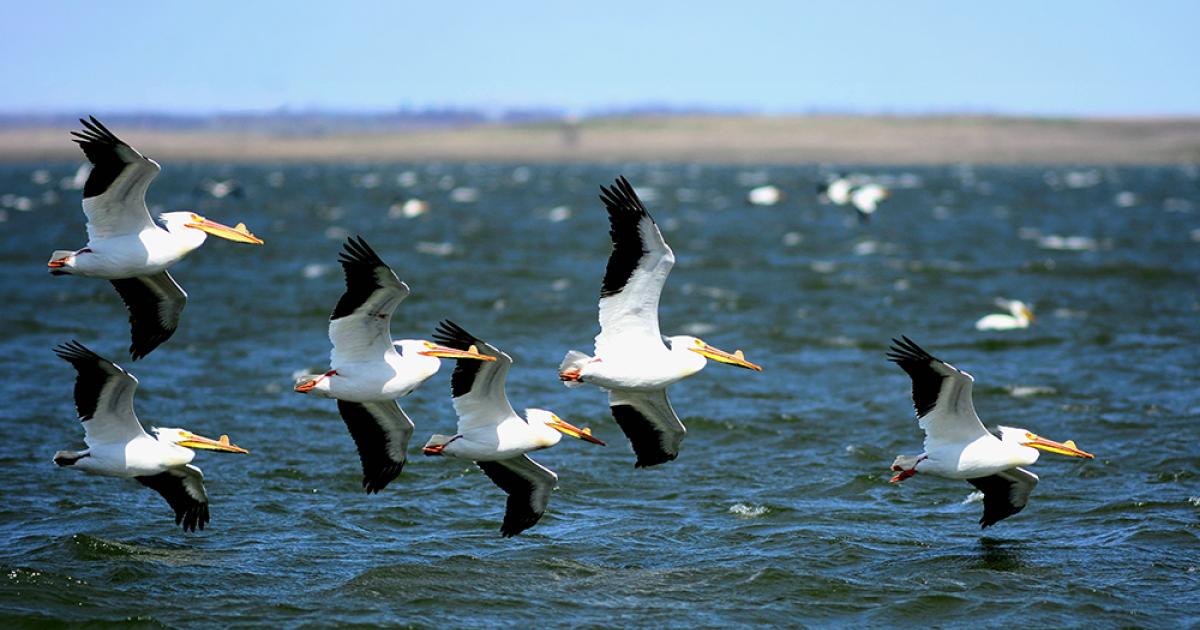
American white pelicans fly over water at Chase Lake National Wildlife Refuge near Woodworth. Photo by Rick Bohn, fws.gov/media/american-white-pelicans-fly-over-water-chase-lake-national-wildlife-refuge-north-dakota
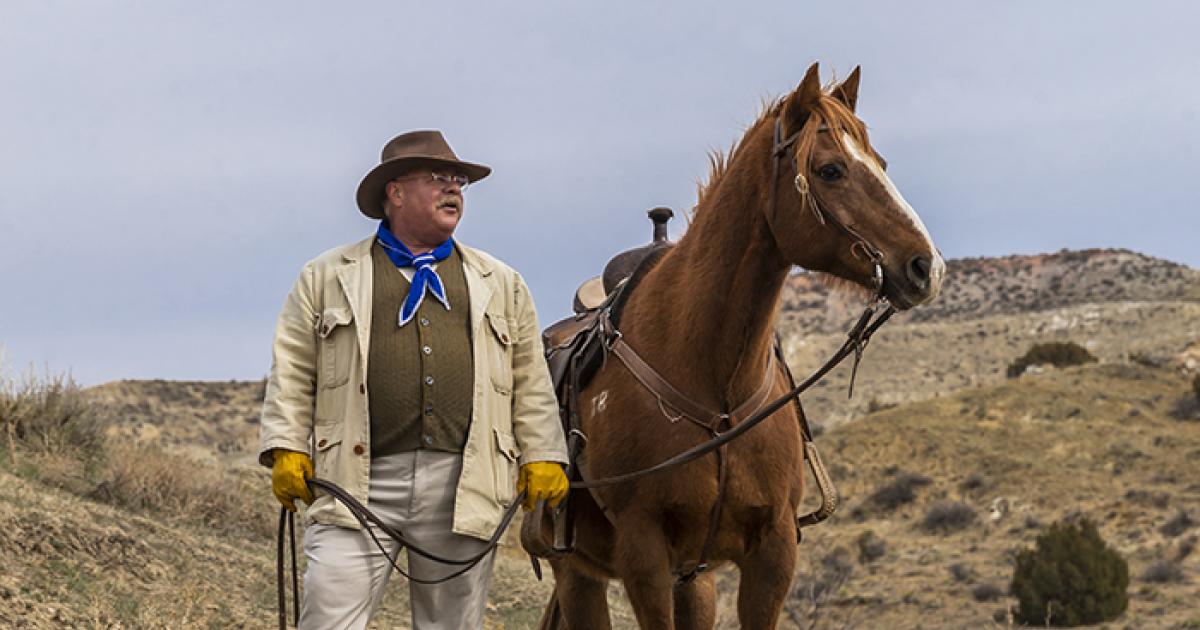
 President Theodore Roosevelt found adventure, purpose and healing in the rolling hills of the North Dakota Badlands. While Roosevelt always had an affinity for the wild world, his time in North Dakota inspired his groundbreaking conservation efforts and eventually earned him the title of America’s conservation president.
President from 1901 to 1909, Roosevelt used his love for the outdoors as fuel to protect it. He established the U.S. Forest Service and signed the 1906 Antiquities Act proclaiming 18 national monuments, many of which were later redesignated as national parks. With Congress, Roosevelt created five national parks, 150 national forests, 55 federal bird and game preserves, and protected over 230 million acres of land.
President Roosevelt and Gifford Pinchot, then chief of the U.S. Forest Service, coined and popularized the term “conservation.” And conservation is still one of the most important parts of President Roosevelt's legacy.
The land Roosevelt loved so deeply – North Dakota – has no shortage of protected lands. North Dakota has 63 wildlife refuges – more than any other state in the nation! The refuges are home to migratory birds, diverse wildlife, scenery and recreation. And the only national park named after a person, Theodore Roosevelt National Park, was established to honor the conservation president.
CHASE LAKE NATIONAL WILDLIFE REFUGE
Chase Lake National Wildlife Refuge near Woodworth is known for its migratory birds and birding experience. The refuge is home to one of the largest nesting colonies of American white pelicans, with almost one-third of the continental population of American white pelicans making Chase Lake their nesting grounds.
The refuge was established under Roosevelt in 1908 to protect native birds. Since the establishment of the refuge, the number of pelicans has grown from 50 to more than 35,000.
Visitors can also view various species of egrets, cormorants, herons, gulls and more. There are also white-tailed deer, weasels, badgers and coyotes for a beyond-birding experience. From the road, visitors can view and photograph wildlife. To protect wildlife, there are various permits for further viewing and even deer hunting.
Chase Lake National Wildlife Refuge is also known for its beautiful scenery, wetlands and unique geology.
Find more information at fws.gov/refuge/chase-lake.
THEODORE ROOSEVELT NATIONAL PARK
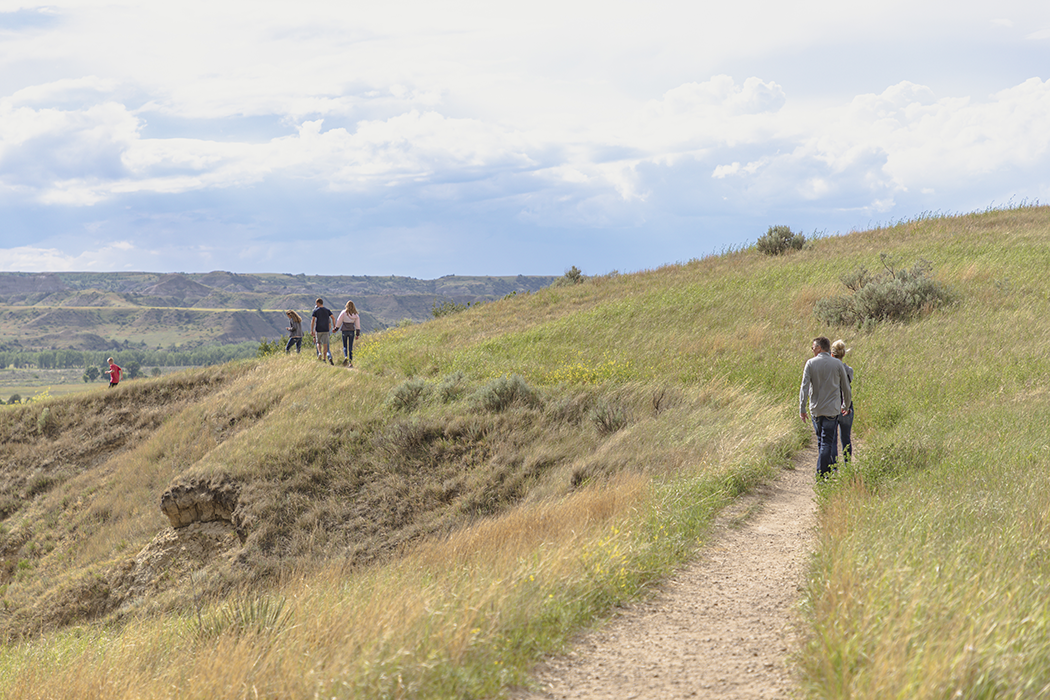
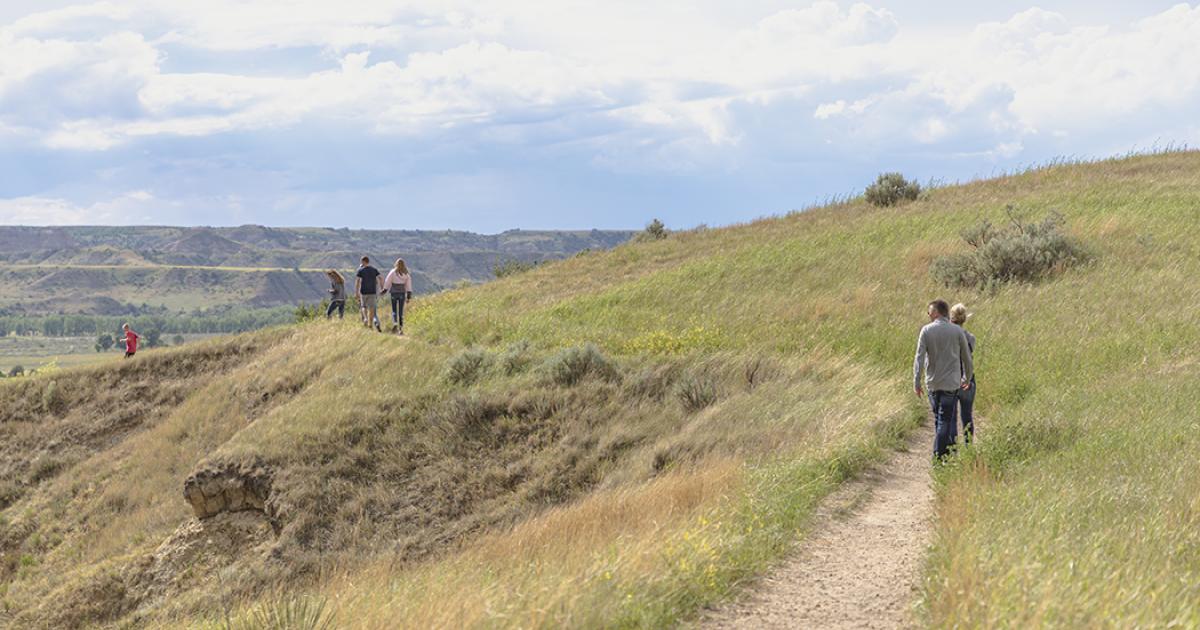
Visit the land Roosevelt himself fell in love with at Theodore Roosevelt National Park. Spanning from Medora to near Watford City, the park is home to the rolling, colorful canyons of the western North Dakota Badlands. History is etched into the multicolored layers of the buttes and the park’s unique landscape, making it a must-see spot in the state. The park is home to the Painted Canyon, Little Missouri River, a petrified forest and more.
Theodore Roosevelt National Park is also known for its wildlife. Visitors get a peek at the past as wild horses, bison, elk and other creatures roam the park.
For the adventure-lover, the park has numerous hiking trails, and visitors can also ride horses on trails in the park. The Maah Daah Hey Trail is one of the top mountain biking trails in the United States, with 144 miles of trail throughout Theodore Roosevelt National Park.
After a day in the park, head into the old western town of Medora for dinner, ice cream and the Medora Musical, a premiere event of the summer. Plus, make plans to tour the new Theodore Roosevelt Presidential Library, which opens in July. Tickets are available now at trlibrary.com/tickets.
Established in 1947, the Theodore Roosevelt National Park honors America’s conservation president, whose love for this place in North Dakota laid the foundation for his preservation efforts as president.
J. CLARK SALYER NATIONAL WILDLIFE REFUGE
The J. Clark Salyer National Wildlife Refuge near Upham is another refuge known for its birdwatching experience. One of the most popular places in the United States for birdwatching, many visitors come to see the Sprague’s pipit, a migratory songbird which calls the refuge home part of the year. The 58,000 acres of land has documented nearly 300 species of birds, including various sparrows, ducks and geese. It’s also home to moose, elk and even mountain lions, giving visitors ample opportunity to see North Dakota wildlife.
Visitors can kayak, canoe and fish on the Souris River Canoe Trail located in the refuge, and there are various hiking trails. For drivers, a 22-mile scenic trail includes the Johnson Bridge, sandhills and beautiful landscapes.
Visit fws.gov/refuge/j-clark-salyer for more information.
___
Kennedy DeLap writes and photographs for North Dakota Living. She can be reached at kdelap@ndarec.com.