Workshops help families plan for the future
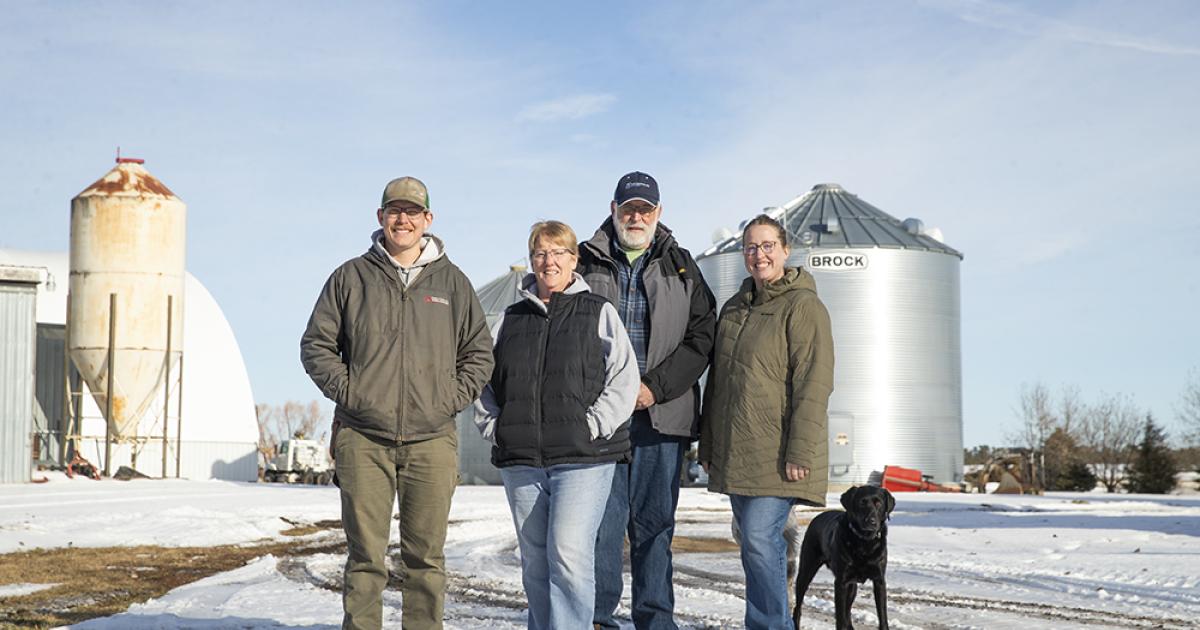
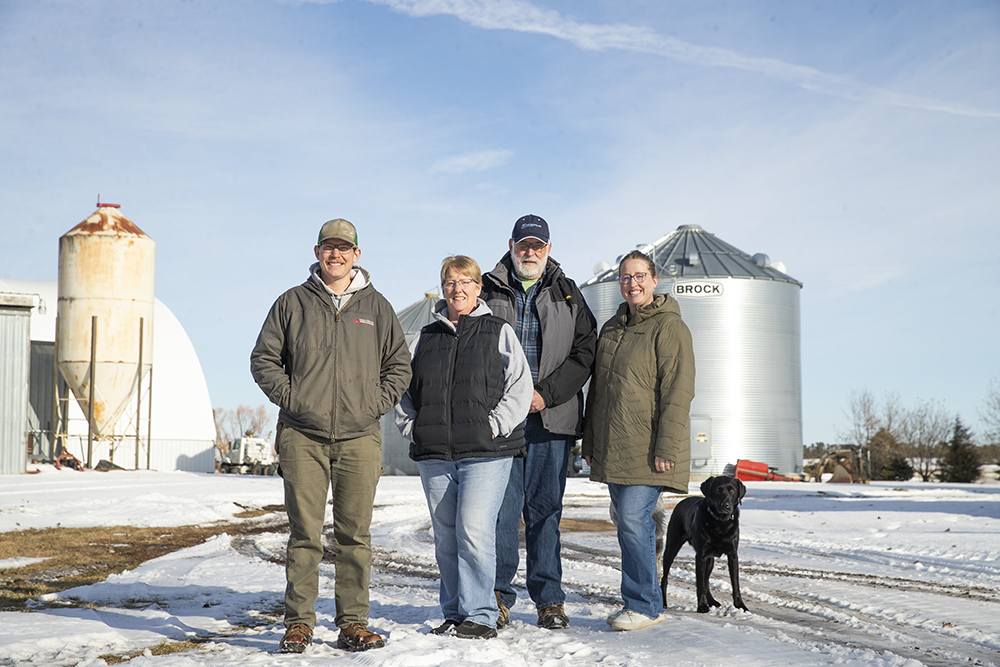
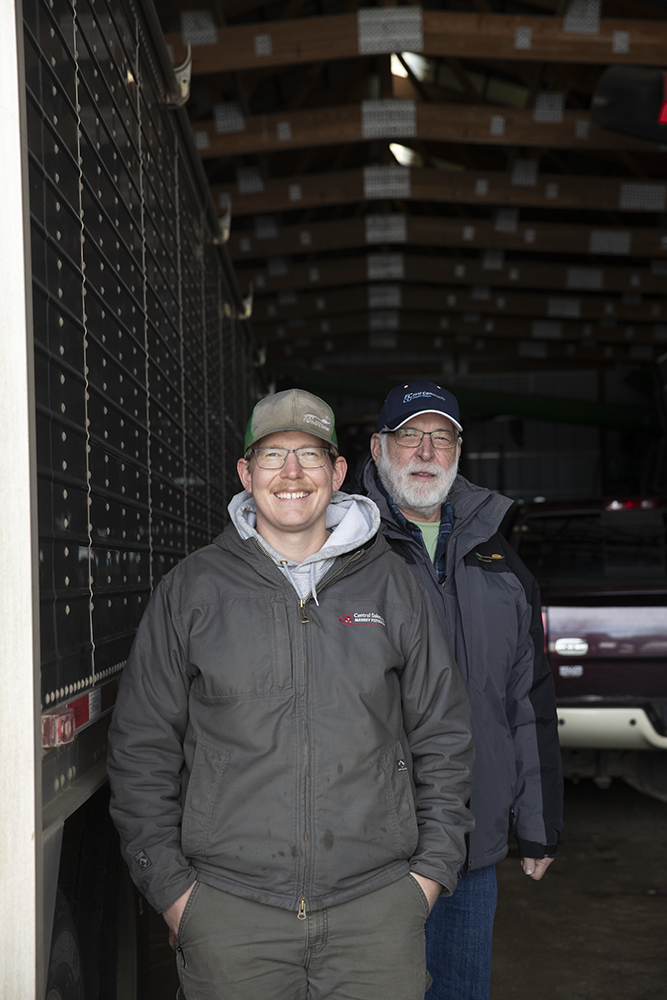
Cass County Electric Cooperative members Bob and Anne Bruns, Valley City, have set their children, son Braylen and daughter Jerilyn Beckman, up for success by having a succession plan in place to eventually transfer the farm to the next generation.
Beyond supporting North Dakota’s economy and feeding the world, farming and ranching is a lifestyle – and livelihood. It is a legacy built on generations of hard work, sacrifice and success.
To protect this legacy and family farms and ranches around the state, North Dakota State University (NDSU) Extension, in partnership with North Dakota Farmers Union (NDFU), has developed succession planning workshops to help families transition operations to the next generation.
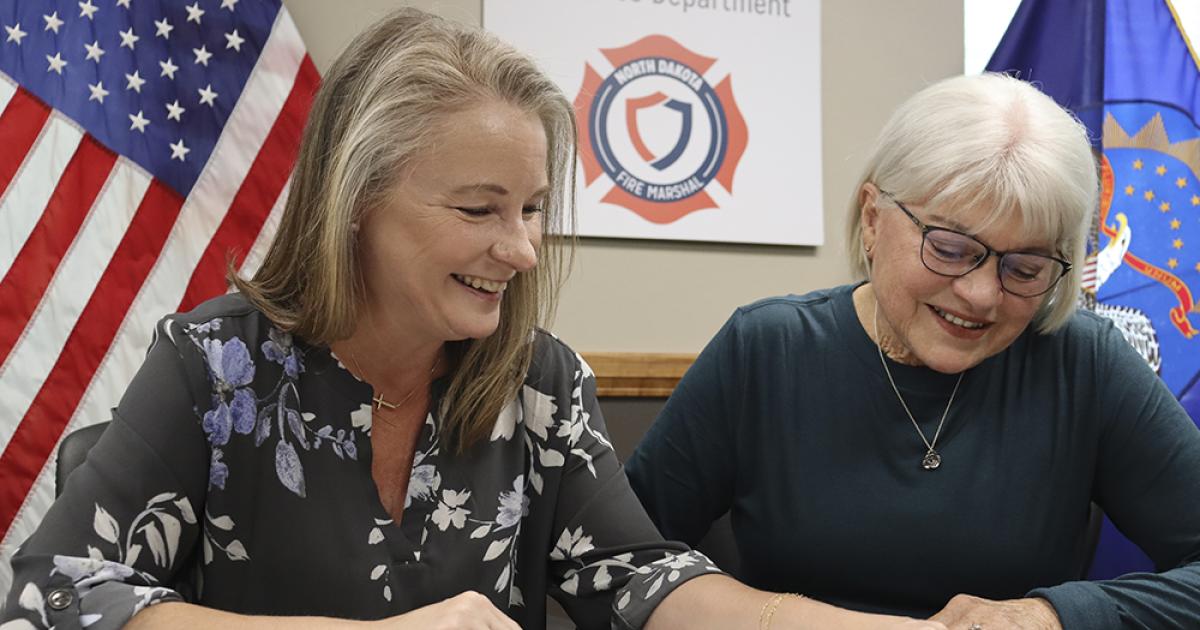
NDFU Farm Management Specialist Amanda McClean says it’s never “too early” or “too late” to start a farm succession plan. She’s even done it with her own family.
Bob and Anne Bruns, Cass County Electric Cooperative members who farm near Valley City, have been laying the groundwork to transition their farm for several years.
Bob is a third-generation farmer who laid his first crop in 1982, but helped his grandfather on the farm long before that. The Bruns’s son, Braylen, will be the fourth generation to farm, while their daughter, Jerilyn Beckman, will stay nearby, but not farm.
Both father and son are heavily involved in cooperatives, with Bob serving as president of Barnes County Farmers Union and Braylen as vice president, and Braylen has been working alongside his parents for several years. He rents land and machinery from his folks, making farm management decisions and slowly expanding the amount of work he does each year.
Last year, Bob and Anne participated in the succession planning workshop through NDSU Extension and NDFU, which helped the family talk about the future of the farm.
“I mean, obviously, as the parents, you don't get every say in how (the farm’s) going to operate once you're not part of it anymore. But it’s important to know what their wishes are so that we, as the next generation, can do our best,” Jerilyn says. “There's plenty of times where farm situations go south really fast, where we get to a point where now (the farm’s) operating in a way that just goes against everything they worked their whole lives for.”
For some families, starting the conversation is the most difficult part. Feeling “ready” to talk about or even envisioning a life after farming can be tough. Remind yourself farming is a business, and you need to have a plan in business, the Bruns encourage.
“There is so much work to be done on the farm that often the last thing you want to do is sit down and think of a 10-year plan, but it is important to do,” Bob says.
As parents, Bob and Anne don’t want their children to be burdened with decisions about the farm. With the help provided by the succession planning workshop, the Bruns are giving their children the plans and resources they need to succeed, because the pressure of carrying on the farm and family legacy can be heavy enough.
“You have the people who come before, (they) have set it all up for you,” Braylen says, acknowledging his parents’ contributions and the farm transition. “What you do with it – and hopefully I can do good, and my kids get the same opportunity and grandkids and so on – but it’s also a lot of pressure.”
The succession planning workshop is more than paperwork and worksheets: It’s a foundation for the future success of family farms and ranches and the continuation of a defining way of life in rural America.
“There is nothing better than working with your family. Not everybody gets to do that. It is a pretty rare thing these days,” Bob says.
“Unless it’s the heart of like, well, corn season,” Anne quips – and two generations of a farm family laugh around the dining room table.
___
Kennedy DeLap writes and photographs for North Dakota Living. She can be reached at kdelap@ndarec.com.
SUCCESSION PLANNING WORKSHOPS JAN. 21 AND FEB. 27
Whether looking to transfer a business to the next generation or thinking about how to divide the family farming and ranching assets, attending a succession planning workshop through North Dakota State University (NDSU) Extension in partnership with North Dakota Farmers Union (NDFU) is a good first step.
According to Bryon Parman, NDSU assistant professor and agriculture finance specialist, succession planning is a strategy or set of decisions and actions that have to be taken for the next generation to take over.
The workshop is typically one to two days long. Experts answer questions and cover numerous topics, from the financials to tax planning, trusts and legal considerations. The workshop can even save families hundreds or thousands of dollars by completing planning steps before going to professionals, who often charge by the hour.
Parman says the most important part of the workshop, however, is the conversation it starts, determining the “who” and “how” of family farm management and beginning that transition. Without these conversations, it can throw “everything into chaos,” Parman says.
Two educational workshops are planned for Wednesday, Jan. 21, in Dickinson at the Stark/Billings County Extension Office and Friday, Feb. 27, in Devils Lake at Lake Region State College’s Hofstad Ag Center. Register at ndfu.org. For more information, call 800-366-6338 or email amcclean@ndfu.org.