North Dakota receives nearly $199 million in first funding wave
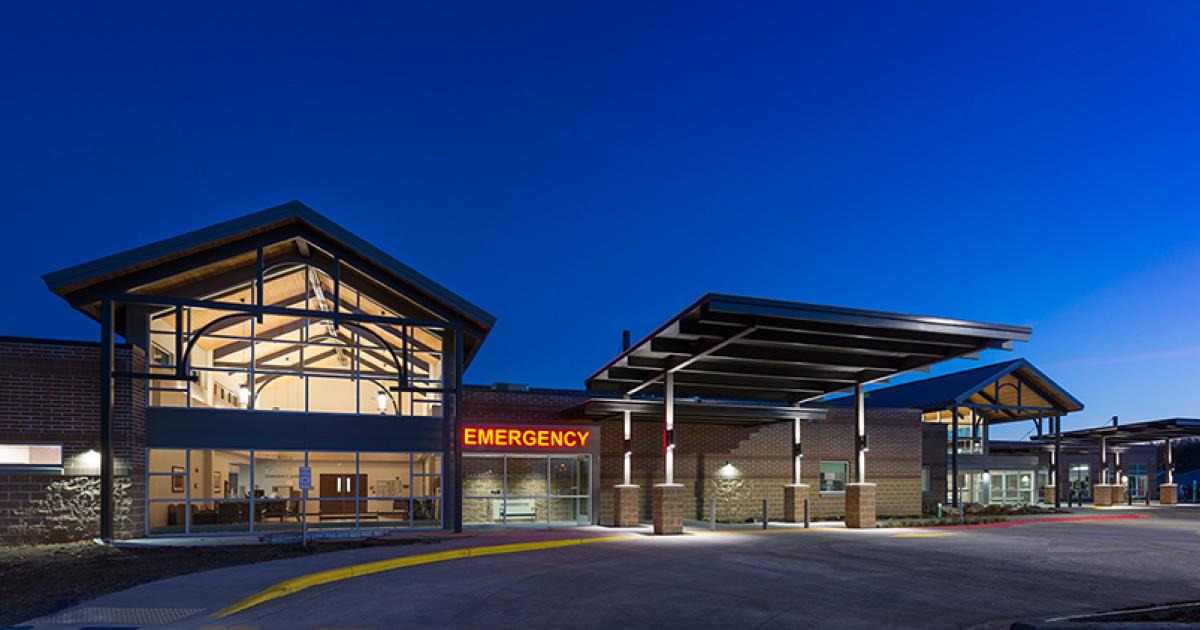
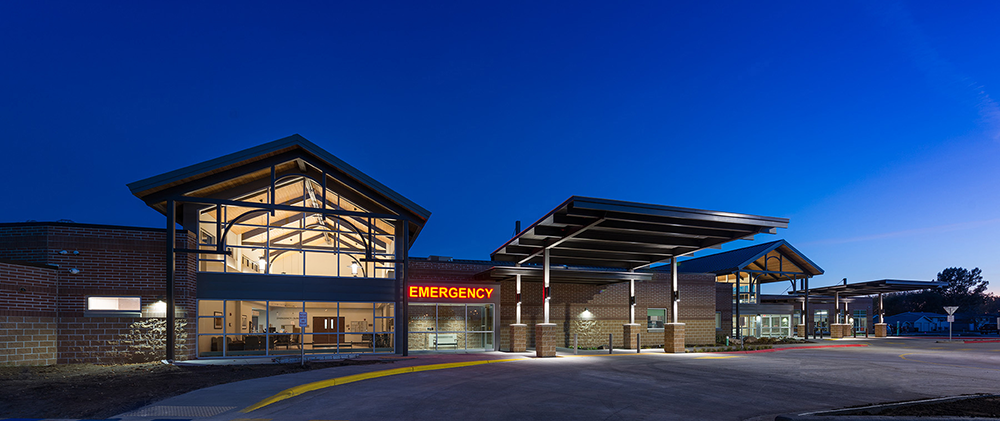
Sakakawea Medical Center, Hazen
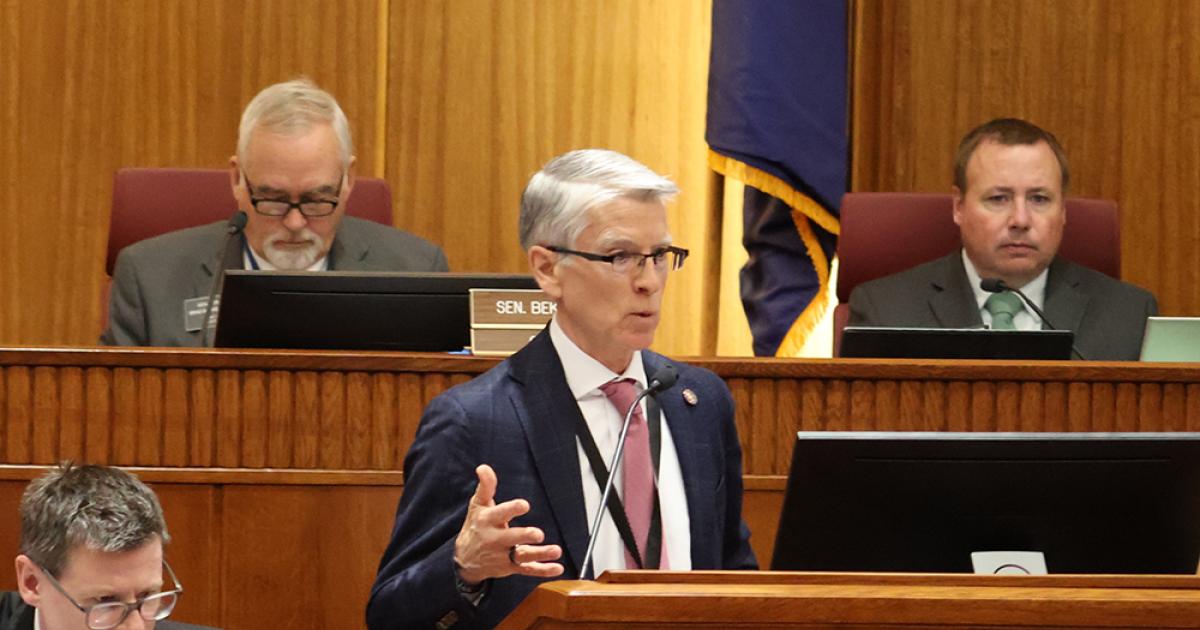

From workforce development to community walkability, North Dakota’s Rural Health Transformation Program (RHTP) provides an all-encompassing blueprint to transform rural health across the state, N.D. Health and Human Services (NDHHS) Interim Commissioner Pat Traynor says.
The five-year statewide strategy hopes to strengthen rural health care and make North Dakota the healthiest state in the nation, funded with nearly $200 million in year one and supported by the Centers for Medicare and Medicaid Services, with NDHHS as the lead agency.
A special session of the N.D. Legislature in January appropriated $397.9 million for the first two years of the program.
North Dakota’s RHTP funding will focus on four pillars, each with subcategories:
• Strengthen and stabilize rural health workforce
• Make North Dakota healthy again
• Bring high-quality health care closer to home
• Connect technology, data and providers for a stronger North Dakota
The RHTP was part of the federal Working Families Tax Cut Act, which appropriated $50 billion nationwide over five years, and was promoted as helping rural states offset impending Medicaid funding cuts.
North Dakota’s share of this Medicaid reduction would be approximately $1.42 billion or 12% of projected federal Medicaid spending in the state, based on a Kaiser Family Foundation analysis over a 10-year period.
But critical access hospitals won’t simply be given funding. Instead, funding will be released through a competitive reimbursable grant process to a myriad of health-related entities, ranging from schools to communities to public health districts to hospitals.
While some rural critical access hospitals struggling with bottom lines have expressed concern about a reimbursable model, Traynor assures the facilities funding will be released in one to two days after receiving an invoice.
And funding will be rural-focused, with Bismarck and Fargo excluded as non-rural areas, he says.
“You have to predominantly serve the rural citizen or the rural patient,” he says.
One goal is to buttress embattled critical access hospitals on the frontline of health care, Traynor says.
“We have this pillar on care closer to home and ensuring the viability, survivability and thrivability of these rural health care facilities,” he says.
“I think we have some really good health care facilities. But in a year’s time, they could be hanging by a thread financially. … Our goal is to bolster them up,” he says. “We don’t want them just to survive, we want them to thrive.”
Every critical access hospital in the state will be given a professional assessment to identify how to become more sustainable and viable, he says, with a consultant coordinating that assessment to analyze the current operations, determine what is sustainable and even explore philanthropy to diversify revenue streams.
“We really want to see all 37 critical access hospitals have a viability and a thrivability strategy, so that’s going to take board training. We’re going to have to do a lot of work to roll up our sleeves, because we can’t probably depend on the federal government to bail groups out. We’re going to have to determine our own destiny,” Traynor says.
BUILDING A SUSTAINABLE FUTURE
Kurt Waldbillig is CEO of the Sakakawea Medical Center, a 13-bed critical access hospital in Hazen with an attached basic care facility, and CEO of Coal Country Community Health Center, a federally qualified nonprofit rural community health center serving residents of Dunn, Mercer and Oliver counties.
He sees opportunities through the RHTP. Within the two separate entities under his watch, he hopes to decrease duplication of workforce and IT infrastructure by bringing the entities all under the same IT umbrella with human resources, financial systems and electronic health records.
Rebuilding that IT system could cost upward of $2 million, he says, but would be more efficient for both providers and patients.
“How do we look at becoming a network, so we can be more sustainable in the future?” Waldbillig says.
Another aspect is bringing high-quality care closer to home, including replacing a mobile two-day-a-week MRI with a permanent MRI site within the facility. Another is providing chemotherapy within the community.
“Right now with the chemotherapy, what I’ve heard within our community is if they go to Bismarck, they’re pulling over in New Salem or Center, and they’re resting in order for them to be able to make it home,” he says.
“We’re identifying what is needed to be able to bring those services closer to home,” Waldbillig says. “Once I get that initial startup cost covered, the program can sustain itself. The RHTP funds help with the startup costs for new programs and can assist rural facilities to be sustainable in the future.”
He plans to take a phased approach for a $5 million to $10 million plan for RHTP funds.
“We’re looking at it from our network as how can we utilize these funds to set us up to be sustainable and stay independent in the future,” Waldbillig says.
HEALTH CARE WORKFORCE
The first rollout of funds in March focused on the health care workforce for the 37 critical access hospitals.
“Health care people are our No. 1 asset, so we need to invest in them,” Traynor says. “How can we grow environments to keep our people and not just give them money, but grow great environments where people are shining at their highest level within these rural health care facilities.”
“Over five years, the goal would be to train our own and to build a sufficient supply and then build the pipelines and getting young people interested in health careers, because they’re very fulfilling, meaningful careers, and we have great institutions here across North Dakota to prepare them to be outstanding health care workers,” Traynor says.
FOCUS ON WELLNESS
The core of the RHTP is a healthier population, Traynor says, pointing to what he deems alarmingly negative trends.
About 71% of North Dakota adults are classified as overweight and approximately 1 in 5 North Dakotans are affected by heart disease and stroke factors. Some 58,000 North Dakotas have Type 2 diabetes.
“Health care is a big part of that and having access to health care, particularly in the rural area, is important, but also that we’re focusing on exercise and food, and so exercise is medicine and healthy whole food is medicine,” Traynor says.
So, he envisions the RHTP developing a network of wellness efforts, ranging from education to getting North Dakotans on the move in rural communities.
“We want to be the state with the most walking groups, so it catches on like a contagion,” he says.
Mental health is also part of the puzzle, with 17.5% of high school students in North Dakota having contemplated suicide, Traynor says.
“It’s a red alert, in terms of our mental wellbeing,” he says."
“We’d like to see full-blown community efforts toward movement and healthy food and then mental health and wellbeing,” Traynor says. “We’d like to have a vision for zero suicides in our state.”
HEALTH CARE CLOSER TO HOME
Within the technology pillar, Traynor envisions technology promoting discussions between providers and patients.
“We want to enhance the ability of physicians to utilize the latest and greatest of technology,” he says.
“Electronic health records using AI and its predictive capabilities to provide better care, so that we don’t have people ending up with some of those chronic diseases later in their lives. You can literally use AI to predict what kind of health we’re going to be in in our 70s and 80s when you’re 35,” he says.
The blueprint is one critical access hospitals understand, Waldbillig says.
“My hope would be for the rural facilities to increase the level of services they’re providing, which keeps health care closer to home, reduces travel time for individuals and sustains that health care locally in the future,” Waldbillig says.
“It takes the rural community to support the local facility. If rural facilities bring services closer to home, communities need to make a conscious effort to say, ‘I’m going to get my health care here.’ It takes a commitment to make sure this is sustainable, not only tomorrow, but five or 10 years down the road,” Waldbillig says.
___
Luann Dart is a freelance writer and editor who lives in the Elgin area.
How North Dakota will use the funds
Strengthen and stabilize rural health workforce
• New rural residencies and training programs
• Grow-your-own workforce pipelines
• Recruitment and retention grants
• Training to help providers work at the top of their license
Make North Dakota healthy again
• Launch Eat Well ND and ND Moves Together
• Expand evidence-based nutrition, physical activity and behavioral health strategies
• Align care models and payment approaches to sustain long-term health improvements
Bring high-quality health care closer to home
• Expand telehealth hubs, mobile clinics and remote patient monitoring
• Reduce reliance on scarce physical workforce
• Improve care coordination and timeliness
• Support sustainability by diversifying revenue sources and right-sizing care delivery models
Connect technology, data and providers for a stronger North Dakota
• Modernize health technology infrastructure
• Improve secure data sharing
• Support shared systems that reduce costs and improve care