The North Dakota Farmers Market and Growers Association is a marketing organization that exists to help growers improve their marketing skills. It also helps producers promote and support their products. To learn more, visit ndfarmersmarkets.org.
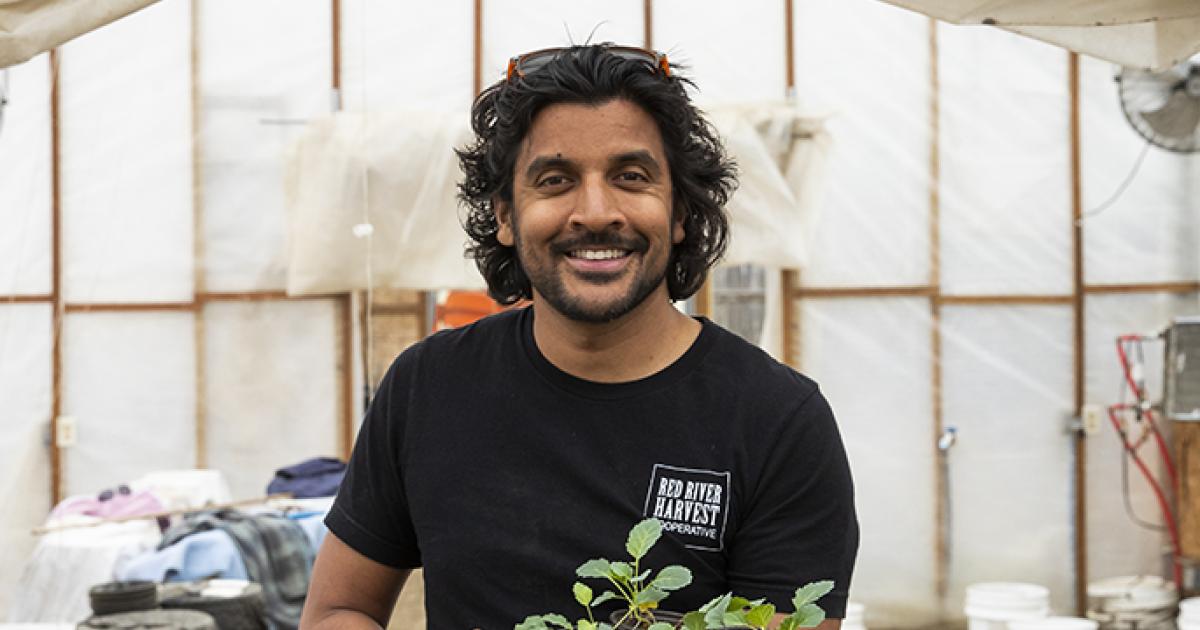
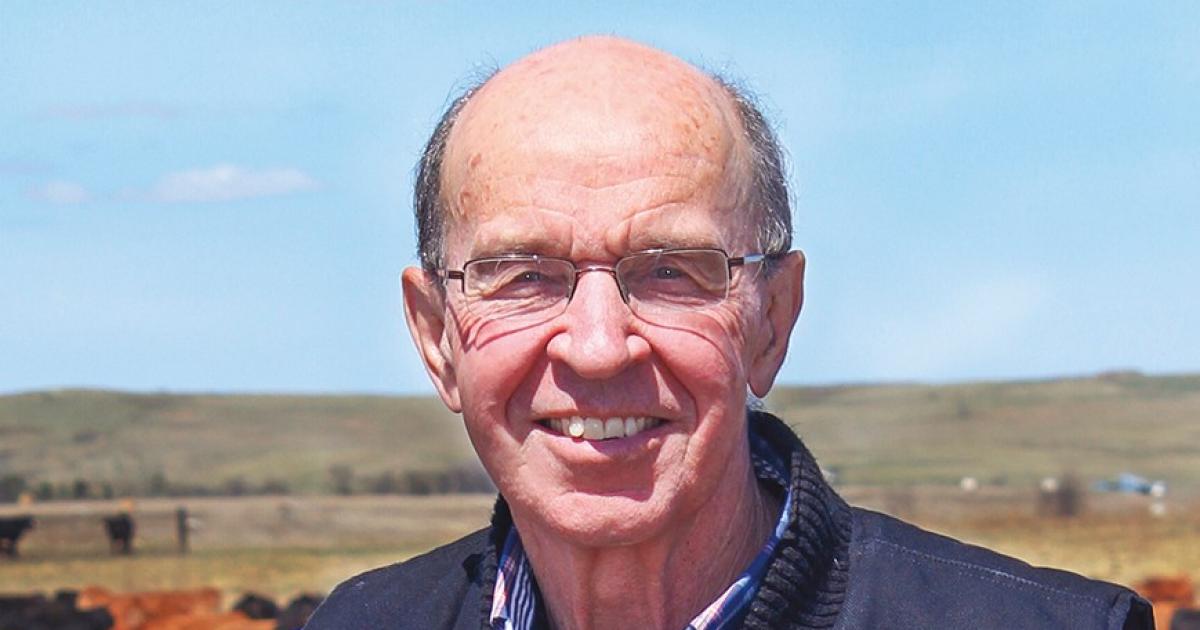
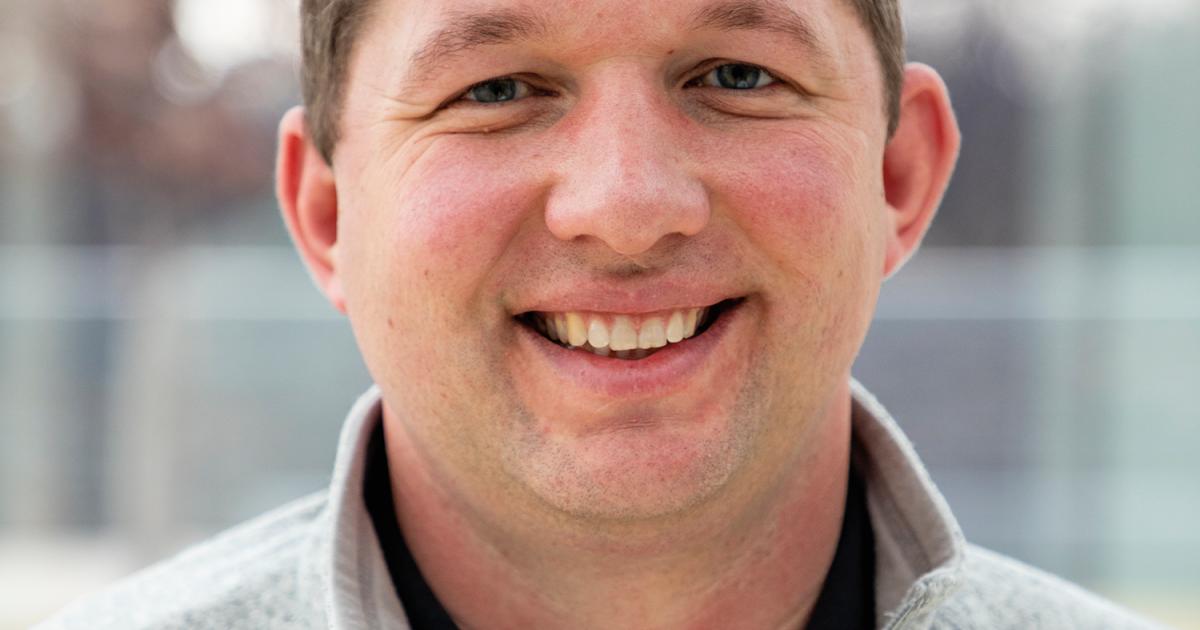
Quinn Renfandt. Photo by NDAREC/Kennedy Delap
When the pandemic hit in the spring of 2020, Quinn Renfandt saw how serious food shortages could be to a landlocked state like North Dakota. It created a sense of urgency he hadn’t felt before.
“I was fascinated – and honestly disturbed – by the fact that we have food deserts here in North Dakota,” he says.
A food desert is an underserved area with limited access to affordable, healthy, fresh food.
Renfandt ought to be concerned. North Dakota produces more than $11 billion in agricultural sales each year. Even though it’s one of the nation’s top food producers, much of its food is exported.
And yet, some communities still struggle to access quality food.
Sprouting more interest
In 2020, motivated by the scarcity issue, Renfandt enrolled in the sustainable ag internship program at Dakota College at Bottineau. The program is offered through the Foundation for Agricultural and Rural Resources Management and Sustainability (FARRMS). He also completed the FARRMS Farmers Market Promotion Program as well as the Farms Beginnings® course.
These programs teach skills such as recordkeeping, farm management, mentoring, and how to determine the financial strengths and weaknesses of a business.
As an intern, he sat beside farmers market vendors and learned more about the marketplace. He saw the point of entry to gain access to this market was low. And he knew it needed a catalyst to grow it further.
“I kind of got to see firsthand what small-scale agriculture looks like, and that also got me in contact with a lot of growers throughout the area. I was able to learn and see what food production truly meant on a smaller level,” Renfandt says.
Leveraging experience with leadership
Renfandt’s passion goes beyond his own farm. He cares about the whole food system and wants to see it succeed.
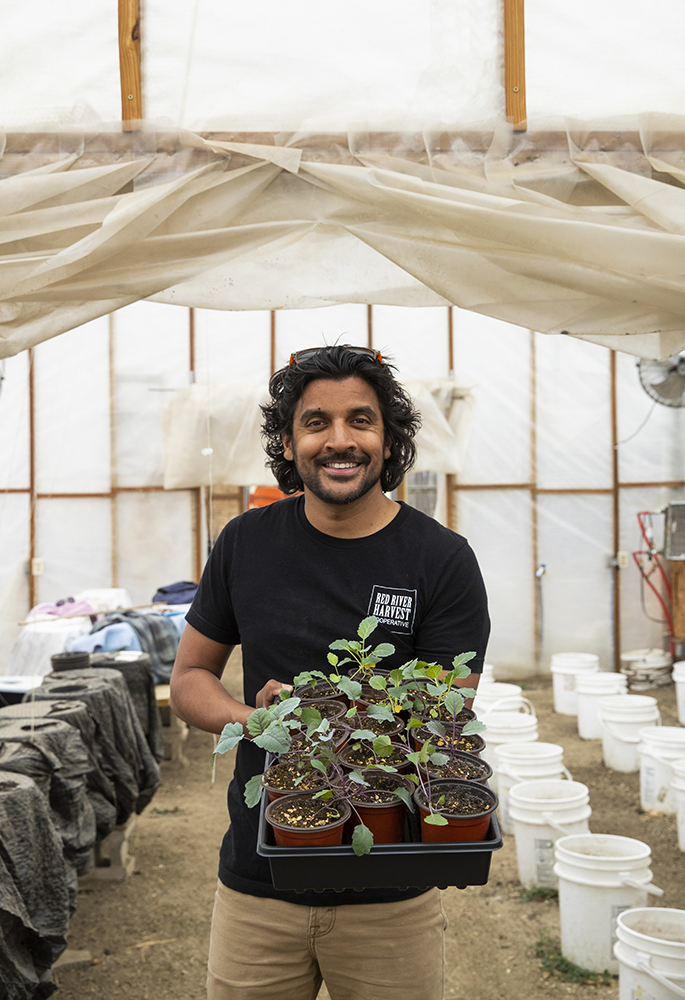
Five years ago, he co-founded the Red River Harvest Cooperative in the Fargo-Moorhead area. The co-op is an online farmers market connecting local producers with consumers. He currently serves as president.
He is also president of the North Dakota Farmers Market and Growers Association and on the steering committee for the North Central Regional Food Hub.
Renfandt also runs his own produce farm near Sawyer named for his grandmother, Betty’s Acres.
At the farm, he grows fresh produce, which he sells in area markets, restaurants and grocery stores.
As a third-generation farmer, Renfandt knows how fragile farming can be. Even with a controlled environment, he realizes one storm or one failure can wipe out his entire season.
“Anything can happen, and it will,” he says. “You have to be really good at managing constant change.”
His operation is served by Verendrye Electric Cooperative, which helps power his geothermal greenhouse. He also uses tunnels to overcome the state’s short-growing season.
His parents, Jerry and Susan, lend a helping hand to the business and use their farm to help with Betty’s Acres’ produce.
Forming a multigenerational future
Renfandt is optimistic about the future. He believes the regional food hub could help grow local food production in central North Dakota.
“If we give this a shot, we could really change something. And I think that that's what this hub is offering – an opportunity to have that conversation to say, ‘You know, over the next five to 10 years, if you're in a position and you're willing to invest the time and energy, there's an economic opportunity to grow production here in central North Dakota,’” Renfandt says.
For him, the hub is a starting point. It provides a path forward. He understands there's a grander vision here, not to be finished in five years. He looks much further ahead to the next 20 to 50 years and sees a sustainable future and connected communities.
For him, local food does more than make money. It builds relationships between customers and farmers. It improves food security through fresh food. And it supports local jobs and strengthens communities.
If this model works as well as he hopes, Renfandt thinks the possibilities will reach much further than North Dakota.
“Food deserts exist globally,” he says. “I think North Dakota could be a shining example for others as to what to do in solving food access for people all over the world.”
___
Clarice Kesler is the communications director for the North Dakota Association of Rural Electric Cooperatives, leading strategic communications including North Dakota Living, digital communications and media relations. She can be reached at ckesler@ndarec.com.