
During spring planting this year, a farmer friend from northeastern North Dakota posted a video on social media with the caption, “Seeding the 128th crop on this farm.” You could tell he took pride in that number.
But more than that, he understood what’s been called “the generational connectedness to the land.” In his case, it was not just any land, but “this land” and “this farm” his great-grandfather homesteaded in 1898. My friend had farmed the land when the farm became a centennial farm in 1998 and when it reached its 125th anniversary milestone. He told me his daughter will be taking over as the fifth-generation owner. She might see it to the 150th.
North Dakota has many farms that have passed the century mark.
One year, at the KFYR Radio Ag Expo, we saluted centennial farms. I had certificates made that included a photo of the Pioneer Farm Family statue on the state Capitol grounds. Many of the centennial farm families came to the Ag Expo to be recognized and receive their certificates.
North Dakota’s Centennial Farms Program was started in 1988 as part of North Dakota’s 100th birthday observance the following year. Since then, more than 1,000 families have registered their agricultural operations as centennial farms. The database kept by the State Historical Society and the N.D. Department of Agriculture shows the earliest centennial farms were settled in the 1870s in the Red River Valley. Most of the farms on the list were either homesteaded or purchased in the 1880s, 1890s and early 1900s.
Centennial farms and ranches can be found in nearly every North Dakota county. Many have now passed the 125-year mark.
For many years, there was a centennial farms interactive kiosk at the Lewis and Clark Interpretive Center near Washburn. One could see photos and read biographical information about each of the farms. Fittingly, that kiosk is now being refurbished and updated in conjunction with the “America 250” celebration being observed this year.
As we celebrate our country’s 250th birthday this month and think about what makes this country great, we should include centennial farm and ranch families and their generational connectedness to the land.
___
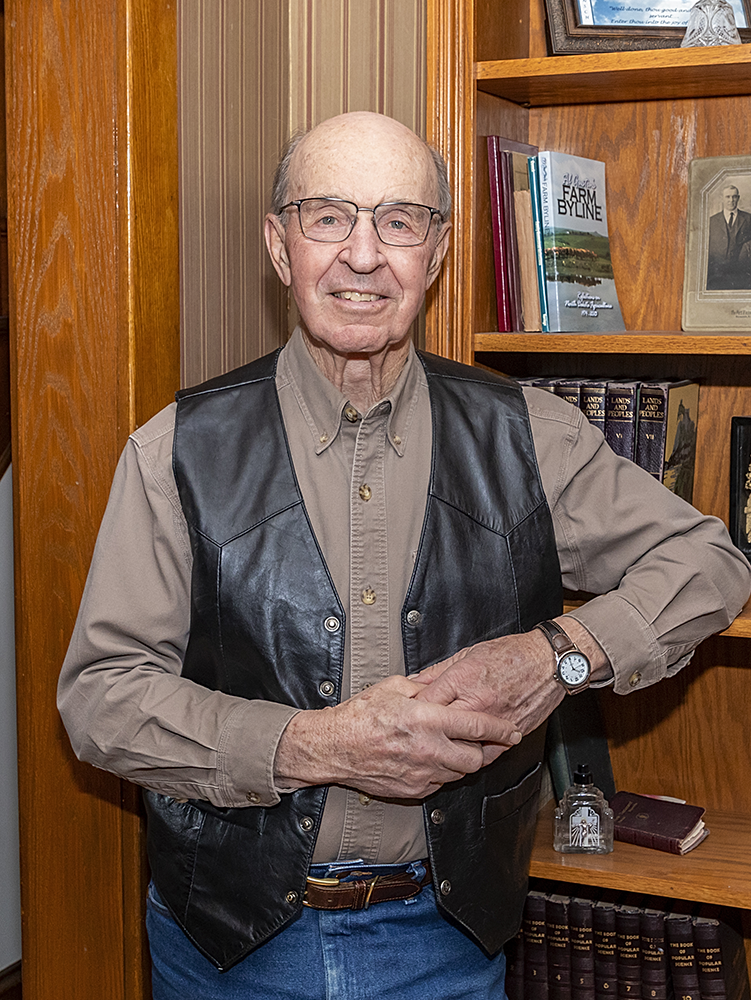
Al Gustin is a retired farm broadcaster, active rancher and a member of Mor-Gran-Sou Electric Cooperative.