The U.S. administration has announced what it calls its Farmer Bridge Assistance Program. The goal is to provide financial support to producers of certain crops negatively affected by tariffs. Farmers will have to certify how many acres of each of the eligible crops were planted in 2025. For farmers, certifying planted acres is nothing new.
In the 1950s, my dad was able to generate a little off-farm income each spring by measuring fields for the government, specifically the Agricultural Stabilization and Conservation Service (ASCS), the agency that oversaw federal farm programs. Dad’s tax records show he had $300 of ASCS income in 1955.
At that time, the federal farm program included acreage allotments as a way to solve the complex and chronic problem of surplus crop production. The national wheat allotment in 1955 was 15 million acres smaller than the base year of 1953. Individual farmers had allotments, too, and fields were measured to ensure farmers complied with program provisions. That’s what Dad was doing.
Interestingly, my older brother also measured fields in the 1960s. By then, technology had advanced to the point aerial photographs were taken of all cropland. The acreage of each field in a photograph was determined by something called a planimeter. My brother and the other technicians would trace the perimeter of the shape of a field with the planimeter, and the device would translate the motion into an area measurement.
Satellite imagery eventually replaced aerial photography. Still, there continued to be paper maps for acreage reporting, although it appears they, too, may be replaced.
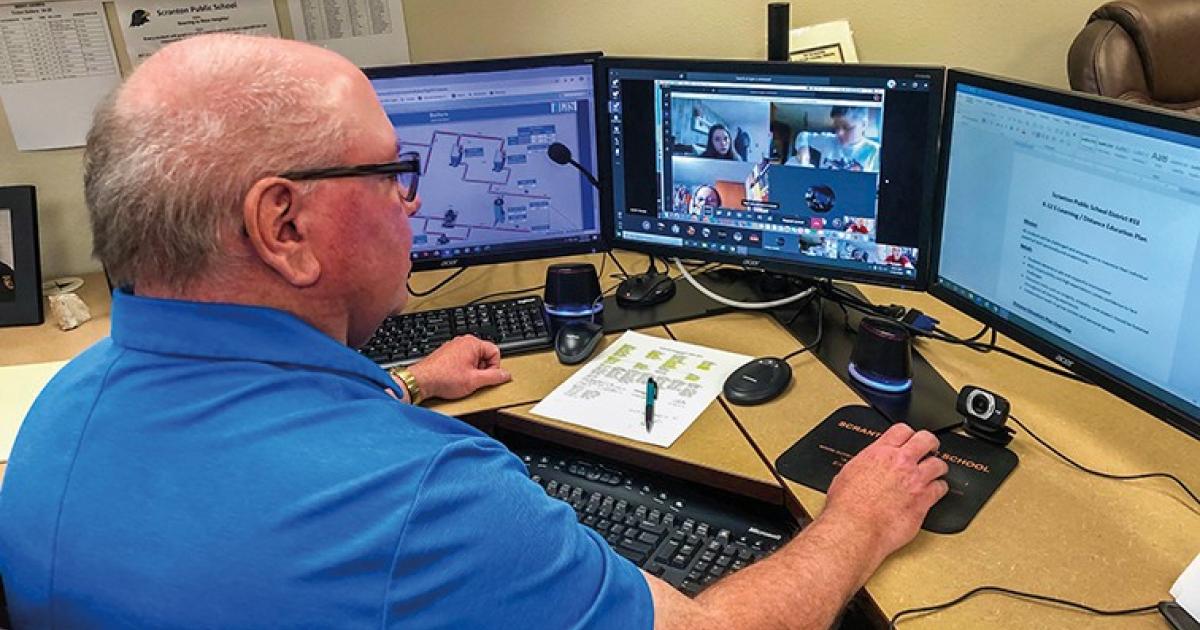
Today, onboard computers in GPS-equipped tractors can record precisely how many acres are planted to each field. That information can then be uploaded from the tractor directly to the agencies that oversee federal farm programs and crop insurance.
I can’t help but wonder what Dad would think of how measuring fields has changed. I wonder, too, what kind of reception he would get today if he drove into a farmer’s yard and said, “I’m with the government, and I’m here to measure your fields.”
___
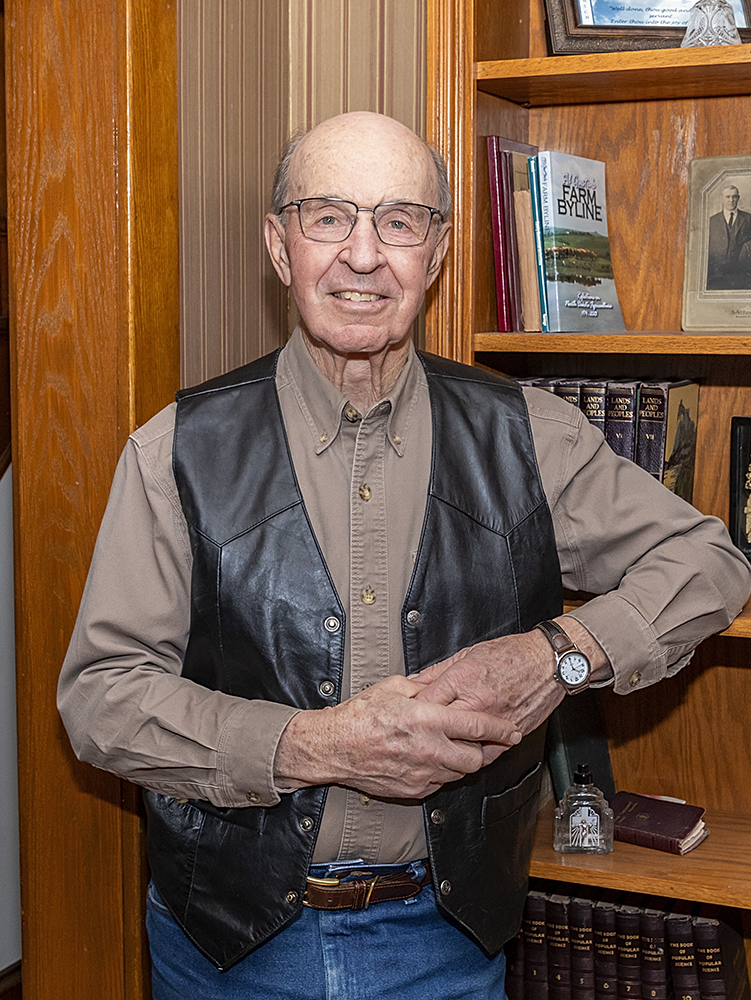
Al Gustin is a retired farm broadcaster, active rancher and a member of Mor-Gran-Sou Electric Cooperative.